Showing posts with label Twenty-one in '21. Show all posts

Tuesday, 14 December 2021

Twenty-one in '21: Contacts

I've read far less in recent years than I would like. To help remedy this, I've set myself the modest target of reading twenty one books in 2021. When I finish one, a thumbnail review here will follow.
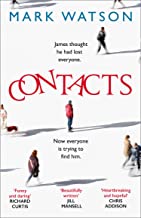
Contacts by Mark Watson

18/21: Contacts by Mark Watson

The blurb: At five to midnight in Euston station, James Chiltern sends one text to all 158 people in his contacts. A message saying goodbye.

Five minutes later, with two pork pies and a packet of chocolate digestives in his pocket, he disappears.

Across the world, 158 phones light up. Phones belonging to James’s friends, his family, people he’s lost touch with. All of them now wondering, where has James gone? What happened to him? And more importantly, can they find him before it’s too late?

Funny and wise, tender and deeply moving, Contacts is a beautiful story about the weight of loneliness, the importance of kindness – and how it’s never too late to reach out.

The review: First of all, I should probably say that I don't know why I set myself these reading goals because, despite their simplicity (so many books in a year), I seem to fail them every time (I only managed seventeen in '19 and a frankly pathetic eleven in '20). Still, here we are, with my eighteenth book of 2021. So, what did I make of it?

Well, on the face of it Contacts is a tough sell - it is, after all, a novel whose chief protagonist wants to kill himself. Speaking as someone who also wrote a novel about someone who wants to kill himself, I know just how tough a sell that is. And, you might think, a grim read. But it isn't, because this is also a novel about human connection and, more specifically, how the oft-maligned hyper-connectivity afforded to us by technology can actually have a positive effect. Oh, and Mark Watson being Mark Watson, there are some funny moments too, he can't help himself. It's not laugh-out-loud funny, but there are plenty of wry smiles to be had, and that's probably no bad thing when your leading character is off on a journey to take his own life.

The blurb seems to suggest that there might be 158 minor characters all reacting to our hero James's last message but don't worry, there aren't - that would be a nightmare to follow. No, the supporting cast of characters trying to save James are his ex, his former best friend, his sister, his flatmate and his mum. It's through their relationships with James that we get his back-story, and come to see how he has come to this point: specifically, on a sleeper train to Edinburgh, where he plans to jump off the bridge that he'd once scattered his dad's ashes from. And whilst these characters provide the context, and avoid having to fill the story in purely from James's flashbacks, they are also the source of my one bug-bear with this novel: whilst not quite stereotypes, they are certainly headed in that direction: the mum who doesn't "get" technology; the over-achieving sibling; the mate you'd crawl over broken glass for, despite his flaws; the partner that left you for someone else but wonders whether they made the right choice... Even the minor characters, like the mum's bumbling but well-meaning new partner and the flatmate's colleague who just wants to get her into bed - they just seem a bit cookie-cutter too. And that's a shame because, for me, this detracted slightly from what is otherwise a very satisfying read.

But only very slightly, because Watson is a talented writer whose prose style keeps the pages turning, to the extent that I am currently very tired because I couldn't put Contacts down, even when crying out for sleep. That has to be a good sign, right? And okay, so the ending seemed a little rushed and didn't have much to do with the supporting cast I'd just spent 350 pages getting to know, but maybe that's a good thing - no spoilers, but I didn't see the ending coming, and that's probably another good sign, right? I do worry slightly for Mark though, because I think to write effectively, convincingly and this matter-of-factly about being in James's state of mind, you probably need to have been there yourself. I don't want to speculate on or second-guess the author's personal life in a review, I just hope he's okay, that's all.

The bottom line: on the face of it, a tough sell, but this is actually an uplifting novel by a talented writer, only slightly let down by some mild stereotyping in the supporting cast.

Since everything online is rated these days: ★★★★★☆

Saturday, 4 December 2021

Twenty-one in '21: The Shrinking Man

I've read far less in recent years than I would like. To help remedy this, I've set myself the modest target of reading twenty one books in 2021. When I finish one, a thumbnail review here will follow.

The Shrinking Man by Richard Matheson

17/21: The Shrinking Man by Richard Matheson

The blurb: While on a boating holiday, Scott Carey is exposed to a cloud of radioactive spray. A few weeks later, following a series of medical examinations, he can no longer deny the extraordinary truth. Not only is he losing weight, he is also shorter than he was. Scott Carey has begun to shrink.

Richard Matheson's novel follows through its premise with remorseless logic, with Carey first attempting to continue some kind of normal life and later having left human contact behind, having to survive in a world where insects and spiders are giant adversaries. And even that is only a stage on his journey into the unknown.

The review: I don't remember much about the '50s screen adaptation of this, the screenplay for which was also written by Matheson, other than that it scared the proverbial out of my big sister. When she went to bed and then found a spider in her room, she had to call me to come and deal with it... and if you've seen the film, or read this, the source material, you'll know why.

Matheson is perhaps better remembered as the author of the brilliant I Am Legend. In a long and accomplished CV, he also wrote Duel, on which Steven Spielberg's breakthrough TV movie was based. But enough of the back catalogue, what about The Shrinking Man?

Well, our protagonist's story is told in alternate takes, part consecutive storytelling in the last week of his shrinking, part flashback to various points in the process. The tale is satisfyingly bookended with the spider that shares Scott's domain (a cellar), and the mechanics of staying alive when you measure your height in fractions of an inch are vividly brought to life. However, it's the flashbacks that are most interesting, as we bear witness to his erosion, not just in physical stature but as a man; gradually, his wife becomes less interested in him; passers-by mistake him for a child; eventually furniture becomes too big for him. All the while, as he physically shrinks, his psyche, his thought processes, his wants and desires, all remain those of a fully-grown adult male. Matheson illustrates this neatly and, at times, uncomfortably - we feel the disjoint that Scott feels and, as his relationship with his wife also shrinks to nothing, we feel that too. It's this aspect of the book that is most brilliantly realised - you really feel the pain of shrinking away, becoming smaller, being less of a man, becoming gradually irrelevant to his wife. So striking is this that I felt the need to research (okay, hit Wikipedia about) Matheson's life to see if his marriage broke down when he wrote this, but that would seem not to be the case - he married his wife in 1952, after which they had four children... and this was written in 1956. So maybe I'm reading too much into this; maybe Matheson was just a very good writer.

Actually, there's no "maybe" or "just" about it - he was a great writer. Okay, so perhaps some of the book that isn't in flashback becomes a bit hard-boiled in places, but the power of the flashbacks more than compensates; indeed, they generated quite an emotional reaction in me that I wasn't expecting. Prior to this I'd only read I Am Legend but this has left me wanting to read more of Matheson - no wonder Stephen King called him "the author who influenced me most as a writer." Oh, and there's a neat double ending too, one pessimistic, one optimistic... clever stuff.

The bottom line: effective and emotional slice of SF that deftly balances the mechanics of a fantastic story with an insight into the fragility of the male psyche

Since everything online is rated these days: ★★★★★☆

Saturday, 6 November 2021

Twenty-one in '21: Airhead

I've read far less in recent years than I would like. To help remedy this, I've set myself the modest target of reading twenty one books in 2021. When I finish one, a thumbnail review here will follow.

Airhead by Emily Maitlis

16/21: Airhead by Emily Maitlis

The blurb: The news has never been more prominent - but are we getting the full story? Newsnight presenter Emily Maitlis gives us a behind-the-scenes look at some of the biggest news stories and interviews of recent years.

In this no holds barred account of life in the seconds before, during and after going on air, Newsnight presenter, leading journalist, and queen of the side eye Emily Maitlis gives us the insider info on what we don't get to see on-screen.

Giving us the inside scoop on her interviews with everyone from Emma Thompson to Russell Brand, and Donald Trump to Tony Blair, as well as covering news stories such as President Clinton's affairs, Boris Johnson's race to PM, Grenfell, #MeToo, and that interview with Prince Andrew.

Airhead is a brilliant exposé of the moments that never make the news.

The review: you've got to love Emily Maitlis, not only for her ability to skewer interviewees but also for her opening and closing monologues on Newsnight. Yes, she's a journalist, and bound by the need for impartiality that the BBC rightly cherishes, but that doesn't stop her judging the public mood, and making the points that we, the viewers, want making. Here's a Newsnight intro on Dominic Cummings as an example.

Of course, the headline attraction for this book is the stellar cast of interviewees that Maitlis has been able to attract over the years, nearly all of whom are identifiable by surname alone: Clinton, Blair, May, Attenborough, the Dalai Lama, Morgan, Brand, Thompson, Bannon, Spicer, Scaramucci, Ramsey, Comey ... Partridge. That the book opens with Donald Trump and closes with Prince Andrew tells you all you need to know: Maitlis is a big hitter, and deservedly so.

Of course the real interest here is what lies behind the interviews. After all, if you just want to rewatch Maitlis at work, well, that's what YouTube is for (for example, Prince Andrew or post-Grenfell May). Indeed, re-watching these interviews after reading the book is fascinating - it is as if an extra dimension has been added. And that's for two reasons: firstly, Emily has provided context, not just for the interview but to the process her team had gone through to secure it; and secondly, there is extra detail about the interviewee, from Emily's perceptions and moments off camera. Indeed, the Theresa May interview that I just linked to is a case in point: Maitlis had helped at Grenfell in the immediate aftermath of the tragedy, and this had naturally given her a strong perspective on what was needed from the prime minister of the day. And yet she writes, "...I must ask questions that I imagine every reporter would ask in my shoes. And it is hard because - in truth - I have sympathy for Theresa May, who is in a wretched position amidst a tragedy of unimaginable proportions. The woman looks shattered, sleepless and distraught. I am in no doubt that she has felt this horror deeply but believed it more important to do than to emote. What else would you expect of a vicar's daughter from Eastbourne? It seems completely understandable. " She continues, "But I learnt a very important lesson that evening: I had to do the interview that the moment required." Compare Emily's sentiment and impressions of May to the "Maybot Malfunction" headlines the Daily Mail ran with after this interview.

And that's what makes this book so fascinating - the extra layers to the story that Maitlis adds, the before, during and after, the context, the extra details. That she brings life to heavy subject matter is testament to a fluid prose style; that she makes her interviewees seem even more interesting can only be attributed to her insights, which are rarely less than incisive. What's interesting about those, of course, is that Emily plays them down, often arriving at them in a kind of "I can't believe I hadn't realised it earlier but..." style. It is disarming, and refreshingly honest.

What this book boils down to, of course, is a glimpse behind the curtain of the modern news machine, and lucky for us the person lifting that curtain is a master of her craft. Luckier still is that she has an engaging, often humourous style that keeps the pages turning nicely. I opened this review by saying, "You've got to love Emily Maitlis" - even if you didn't before you read this book, you will by the end of it.

The bottom line: fascinating, funny and very readable account of Maitlis's "greatest hits" that those with an interest in current affairs will devour, but Newsnight virgins should love too.

Since everything online is rated these days: ★★★★★☆

Tuesday, 19 October 2021

Twenty-one in '21: Nameless, Season 2

I've read far less in recent years than I would like. To help remedy this, I've set myself the modest target of reading twenty one books in 2021. When I finish one, a thumbnail review here will follow.

10-15/21: Nameless, Season 2 by Dean Koontz

The blurb: Behind a wall of amnesia, he can’t remember anything. Maybe he can’t bear to. Nameless knows only the mission: Directed by the mysterious Ace of Diamonds, he travels the country, turning predators into prey. But the pain in his past can’t hold him back when dark visions of the future lead him toward his greatest test yet. Nameless is closing in on a revelatory endgame in this collection of short thrillers from #1 New York Times bestselling author Dean Koontz.

The review: regular readers might recall that I read and reviewed the first sextet of Nameless novellas last year. I quite enjoyed them, summarising that "if you like Koontz already, you'll like these too. They won't change the world, but would make intriguing films or, better still, a mini-series." Well, following the series analogy, here's Season 2, another batch of six novellas that progress, explain and ultimately conclude the strange tale of Nameless, an Equalizer for our times. For our protagonist roams the US, dispatching awful people who have somehow escaped justice through formal channels. In that regard, Koontz has created a satisfying set-up.

Of course this is Season 2, so something needs to be a bit different, to prevent it becoming samey. And there is difference; more is made of Nameless's preternatural abilities, specifically his apparent clairvoyance, and how that becomes more frequent. Beyond the utility of this skill in his chosen line of work (foresight enables Nameless to avoid getting killed, and help others more effectively), this precognition also serves to introduce a second story arc, in which our (anti-) hero foresees the imminent rise of crypto-fascist group in his homeland, and increasingly dreams of them carrying out appalling acts. His desire to stop this group before it can really get started becomes woven into the other wrongs that Nameless rights, and provides a theme that runs throughout the six novellas. Given the charismatic but appalling leader of the group, and the actions of his followers, it's hard not to speculate that Koontz was thinking of Trump, the invasion of the Capitol, and the schism of reason in the US right now. Certainly that's a parallel that I could see, intended or otherwise.

The other underlying theme is the true identity of Nameless and his handler, Ace of Diamonds, and what has brought them to this way of life. I think I can avoid a spoiler by hinting that the latter turns out to be interwoven with the crypto-fascist plot mentioned earlier. Anyway, for the most part the big reveal of Nameless and co is handled well - it's a satisfying explanation, albeit one that stretched (but did not break) this reader's credulity on occasion.

Ultimately, this is a sequel series, a follow-up, and the inevitable question must be, does it measure up to what came before? And the simple answer is yes. It has the same strengths as Season 1: well-paced, and with a prosaic style that suits the subject matter well. It has the same weakness too: occasional pontification, the sermon according to Nameless (or Koontz). My Kindle tells me that lots of people are highlighting some of these grand pronouncements but they are mostly just truisms and, if anything, they disrupt rather than add to the storytelling. That said, I again rattled through the six stories that make up Season 2 and, although I viewed with denouement with the plot-scrutinising, plausibility-busting eye of a wannabe novelist (and found it slightly lacking), I still enjoyed these last Nameless tales. I still think they would make a good TV mini-series. I'd certainly watch it.

Bottom line: fast-moving, engagingly written series of stories that will satisfy Koontz fans without winning anyone else over.

Since everything online is rated these days: ★★★★☆☆

Thursday, 23 September 2021

Twenty-one in '21: Before We Was We

I've read far less in recent years than I would like. To help remedy this, I've set myself the modest target of reading twenty one books in 2021. When I finish one, a thumbnail review here will follow.

Before We Was We by Madness

9/21: Before We Was We by Madness

The blurb: In Before We Was We Madness tell us how they became them. A story of seven originals, whose collective graft, energy and talent took them from the sweaty depths of the Hope and Anchor's basement to the Top of the Pops studio.

In their own words they each look back on shared adventures. Playing music together, riding freight trains, spraying graffiti and stealing records. Walking in one another's footsteps by day and rising up through the city's exploding pub music scene by night. Before We Was We is irreverent, funny and full of character. Just like them.

The review: this is as close as we are likely to get to a collective autobiography of The Nutty Boys, one-time Invaders, Madness. Rather than regular prose, the book comprises recollections from all band members, chronologically ordered and grouped into chapters that follow the magnificent seven from 1970 right through to the release of My Girl, their third single and the point at which they felt they had "made it". And when I say not regular prose, I mean the whole book is in this format:

Before We Was We excerpt

There are pros and cons to this format. It doesn't read with the flow of a more conventional structure, however carefully interwoven the quotes are, but it does allow you to quickly identify seven similar but unique voices, and it does allow you to dip in and out of the book easily.

As for the content, well, it's an enlightening read, and I say this as someone who thought he knew a lot about the band already. Most of it concerns the band members' childhoods, all growing up in and around the same north London streets at a time when bomb sites were still a playground and there were only three channels on TV. What quickly emerges, aside from the basic commonality of being the same age in the same place, is the fractured home lives of the seven - you can quite see how being in a gang, and then a band, would have appealed to them all, the group mentality of it, us against the world...

And then there's the criminality, mostly petty but some not so: theft, mainly. But there are also burgeoning graffiti careers going on here, and jumping freight trains, drugs, breaking into gigs and cinemas... you name it, someone in Madness has probably done it, at some point. Time at her majesty's pleasure too. And yet they emerge from these recollections, not as deplorable figures or requiring sympathy, but as lovable rogues, chancers who have learnt and moved on. Of course that's the joy of autobiography, you get to paint things your own way. But it feels genuine... and it's very readable too, and at least as interesting as the later years in the book when the band are starting to happen, and records are getting made.

That's an interesting point, actually, for out of the twelve years or so covered by this book only the last three cover years when Madness were releasing records. The first nine years cover the formative experiences of the band, literally what made them what they were, and for all that make a fascinating social history of growing up in the Seventies, of being a kid in a London that still felt austere and post-war. On that basis, you don't necessarily have to be a Madness fan, or know much about their music, for this to be an enjoyable read. I hope there will be a follow-up, covering the heights of their early career, band members leaving, the break-up, "The Madness", Madstock and the National Treasure treadmill they're now on; I would certainly buy and read that. But I don't see how it can be more interesting than this.

The bottom line: fascinating look into a time and place that doesn't exist anymore, as much as genuine and engaging autobiography of a much-loved band.

Since everything online is rated these days: ★★★★★☆

Monday, 20 September 2021

Twenty-one in '21: Two Tribes

I've read far less in recent years than I would like. To help remedy this, I've set myself the modest target of reading twenty one books in 2021. When I finish one, a thumbnail review here will follow.

Two Tribes

8/21: Two Tribes by Chris Beckett

The blurb: As a historian in the bleak, climate-ravaged twenty-third century, it's Zoe's job to record and archive the past, not to recreate it. But when she comes across the diaries of Harry and Michelle, who lived two hundred years ago, she becomes fascinated by the minutiae of their lives and decides to write a novel about them, filling in the gaps with her own imaginings.

Harry and Michelle meet just after the Brexit referendum when Harry's car breaks down outside a small town in Norfolk. Despite their different backgrounds, and Michelle having voted Leave while Harry voted Remain, they are drawn to each other and begin a relationship.

From her long perspective, the way Zoe sees their world is somewhat different from the way we see it now. Two Tribes becomes a reflection on the way our ideas are shaped by class and social circumstances, and how they change without us even noticing. It explores what divides us and what brings us together. And it asks where we may be headed next.

The review: I've read a bit of Chris Beckett before. He does a nice line in cleverly constructed and very plausible speculative fiction... the slight difference here is that the imagined future serves primarily as a vehicle for examining the mess we are in now. Okay, I suppose you could argue that a lot of speculative fiction does that, inviting you to join the dots between the now and some imagined dystopian hell. But Two Tribes imagines a future historian, looking back at these early years of the 21st Century with an academic detachment, albeit a detachment that falters as she becomes more engrossed in the entwined lives of protagonists Harry and Michelle.

I should also add, to save the time of any readers that aren't interested, that Brexit plays a massive part in this story. Harry and Michelle's romance plays out like a Romeo and Juliet for our times, with Leave and Remain replacing the Montagues and Capulets. So, cards on the table: I voted to remain in the EU. I have also been pretty scathing about the arguments of the average Leave voter, have despaired at the impact of Brexit, and have indulged in a fair amount of "See, I told you so, look at the mess we're in now" hand-rubbing at Leave-voters' expense. So it's a credit to this book, this work of fiction, that it has made me think about how and why so many people came to vote Leave more than almost anything else. Don't get me wrong, I still don't forgive Cameron for calling the referendum, and I certainly don't forgive people like Farage, Johnson, Cummings et al for campaigning to leave... but I can understand some of the Leave vote better now. That's something no amount of Guardian articles has managed for me...

There's a timely environmental sub-plot going on here too. An unspecified climate event has occurred sometime between now and historian Zoe's time; it is referred to as The Catastrophe. The fall-out from this is neatly illustrated with a succession of small details: parrots are more common in Zoe's London than pigeons; the preying mantis is a common pest; rising water levels have literally reshaped the country; and constant work on flood defences is essential but poorly-paid work for the slum dwellers of London's shanty towns. The historical perspective also allows incredulity to be expressed about our current way of life: on a number of occasions, Zoe expresses amazement that people in the 21st Century would drive around in personal vehicles that burned 4 or 5 litres of refined oil every hour. The implication is obvious, every time: we're making out own Catastrophe, right now.

There's more going on too - the central theme of Two Tribes seems to be how polarisation leads to separation and division, that when everything is black and white with no shades of grey (and no compromise) then the result will inevitably be conflict. Beckett drops this backstory in neatly, and historian Zoe lays the foundations for a civil war so consuming that not even The Catastrophe can stop it.

On the face of it, this is an easy read: Beckett's prose flows nicely, he creates a compelling and plausible future, and the two storylines (Zoe's, and that of Harry and Michelle) both keep moving forward - the pages keep turning. But it is also an uneasy read, making it all too easy to extrapolate our current situation, politically, socially and environmentally; for this reader, who already thinks that everything is going to hell in a handcart, Two Tribes will linger long in the mind, and prompt many an uncomfortable question whilst it does so.

The bottom line: well-written and all too plausible dystopia, and carefully-constructed, thought-provoking examination of the now, through the imagined lens of history.

Since everything online is rated these days: ★★★★★☆

Tuesday, 31 August 2021

Twenty-one in '21: Billy Summers

I've read far less in recent years than I would like. To help remedy this, I've set myself the modest target of reading twenty one books in 2021. When I finish one, a thumbnail review here will follow.

Billy Summers

7/21: Billy Summers by Stephen King

The blurb: From legendary storyteller and No. 1 bestseller Stephen King, whose 'restless imagination is a power that cannot be contained' (The New York Times Book Review), comes a thrilling new novel about a good guy in a bad job.

Billy Summers is a man in a room with a gun. He's a killer for hire and the best in the business. But he'll do the job only if the target is a truly bad guy. And now Billy wants out. But first there is one last hit. Billy is among the best snipers in the world, a decorated Iraq war vet, a Houdini when it comes to vanishing after the job is done. So what could possibly go wrong?

How about everything.

This spectacular can't-put-it-down novel is part war story, part love letter to small town America and the people who live there, and it features one of the most compelling and surprising duos in King fiction, who set out to avenge the crimes of an extraordinarily evil man. It's about love, luck, fate, and a complex hero with one last shot at redemption.

You won't put this story down, and you won't forget Billy.

The review: one side-effect of buying e-books (which a lack of bookshelf space requires me to do these days) rather than their physical equivalent is that you have no sense of the heft of the book. King is no stranger to writing very long novels, but has turned in a few shorter efforts (Elevation, Joyland and Later being recent examples). And I thought this was going to be another, as it very quickly seemed to be coming to a conclusion, ramping up for a classic King denouement. But then I noticed, courtesy of my Kindle's progress bar, that I was only about 30% of the way through. Clearly there was much more to come.

Fortunately for all concerned, this was not a problem, as Billy Summers barrels along like the very best of King's work - I found it hard to put down, and often lost great chunks of time as I kept telling myself, "Just one more chapter."

I don't have to go into great detail about the plot - the blurb covers that nicely. What I will add is that this book, like so many in the King canon, is also about writing - our hero's cover story is that he is an aspiring novelist whose agent has procured office space for him to work on his book. Office space that just happens to overlook the courthouse steps on which Billy is to shoot a bad man. Since he has time to kill, and to maintain his cover, Billy starts to write, a work of fiction that quickly turn to autobiography. And so we have two stories here - one is the tale of a sniper-for-hire's last job, the other is his backstory. It is hard to say which is most compelling, especially when you learn that Billy's story is of abusive parents, a care home, the army, the Iraq War... and all manner of horrors.

That's an interesting phrase, actually. For whilst horror is the genre that made King the colossal global success that he is, I would say there's a strong case to be made that his best work, certainly in recent years, is not horror per se. This is a straight up-and-down suspensful thriller - there's no genre horror here. Instead, King deals in the many horrors of reality - of bad men that do unspeakable things, of killers, of unjust wars. It will slip under the radar because of its context, but Billy's account of clearing houses in Fallujah is an intense as you might imagine.

Of course, King being King, he can't help himself, in that towards the end of the book action moves to Colorado, and a location that overlooks the site of a hotel that had burnt down, and that was rumoured to be haunted. And there's a painting of some topiary animals, in which the animals appear to move... In some ways this is a nice self-referential touch, and places the book in the wider King universe, but is completely unnecessary and doesn't serve the story at all. And if it's just for Constant Readers like me to have an "a-ha" moment, well, it's too blunt for that. But this is a minor quibble.

What is a slightly bigger quibble, for this reviewer at least, is a leap of faith that King asks the reader to take shortly after the 30% mark that I mentioned earlier. It concerns the coming together of the "compelling and surprising duo" mentioned in the blurb; although King is pretty frank about the unlikelihood of what happens, and uses all the considerable storytelling tricks at his disposal to explain it, the circumstances of the coming together still didn't feel plausible to me. I can't explain more without plot spoilers, but I can say this credibility gap will cost the book a star from my review, and that's a shame because other than that I really enjoyed it, became totally engrossed and, as I've said already, found it hard to put down.

The bottom line: not one but two (maybe even three) stories coalesce in this fine suspenseful thriller, a reminder from the master that real horror lies not in vampires and boogeymen but in the evil that men do.

Since everything online is rated these days: ★★★★★☆

Friday, 27 August 2021

Twenty-one in '21: The Nanny State Made Me

I've read far less in recent years than I would like. To help remedy this, I've set myself the modest target of reading twenty one books in 2021. When I finish one, a thumbnail review here will follow.

The Nanny State Made Me

6/21: The Nanny State Made Me by Stuart Maconie

The blurb: It was the spirit of our finest hour, the backbone of our post-war greatness, and it promoted some of the boldest and most brilliant schemes this isle has ever produced: it was the Welfare State, and it made you and I. But now it's under threat, and we need to save it.

In this timely and provocative book, Stuart Maconie tells Britain’s Welfare State story through his own history of growing up as a northern working class boy. What was so bad about properly funded hospitals, decent working conditions and affordable houses? And what was so wrong about student grants, free eye tests and council houses? And where did it all go so wrong? Stuart looks toward Britain’s future, making an emotional case for believing in more than profit and loss; and championing a just, fairer society.

The review: that this book is variously subtitled "In search of a better Britain" and "A Story of Britain and How to Save it" should give you an idea of what it's about. Maconie has taken a good look at modern life in this sceptred isle and decided that it is, in many ways, rubbish, especially compared with how it once was. And here's a heads-up: if you read that last line and immediately think, yes, that's right, then you're probably going to enjoy this book. Equally, if you immediately think, gah, what nonsense, well, this book might change your mind... but probably won't. For whilst it does make a case, does bang the drum for how things could be, it is more a love letter to a Britain recently deceased.

When I was at primary school, we used to watch TV once a week on a big old wooden set that was bolted to the trolley it was wheeled in on. Sometimes there would be a clock on-screen before the programme started, and we'd count down to the start as the second hand swung round; one channel's clock had little circle markers on its face, instead of a second hand, and some boys would pretend to shoot them as they disappeared. But I digress. One such schools programme was entitled How We Used To Live, which centred on late-Victorian families and gave us a primary-friendly dose of modern history in the process. It sticks in the mind, even now. And the reason I mention it here is that Maconie's book is, in many ways, a How We Used To Live for the period of 1945-1979, painting a pleasingly honest (and honestly pleasing) account of the post-war birth of the welfare state, its growth, its benefits and its glories... before coming to the end, or at least the beginning of the end, when a shopkeeper's daughter from Grantham arrived at No. 10 and changed everything.

The book is divided into themed chapters, each looking at an aspect of the nanny state: health, education, public transport, libraries, broadcasting, you get the idea. In each case, Maconie takes a look at how good things got, and how they got there. Inevitably, there is also an examination of how, when and why things went wrong. And, in most cases, there are examples of the silos of the nanny state that are still good despite the seeming best efforts of those in power to ruin them forever: the healthcare practice that is still run as if by a healthcare authority, the bus service that is still in public ownership, the BBC. That these are presented as examples of how it is still possible to do things the right way is uplifting... but they also serve as a warning of what is still there to be lost.

I guess the other interesting aspect of the positives that Maconie tries so hard to leave each chapter with is that they serve as something of a manifesto; shining a light on the best of how public services can still be, domestically and overseas, illuminates how they perhaps should be across the board.

There are some nuggets from this book that will stay with me for a long time: how European state-owned utility companies are running aspects of UK water provision, the profits from which then fund French and German water infrastructure improvements rather than the UK's, is one; the difference in how Norway handled, and spent, the money from its own North Sea oil boom is another. But The Nanny State Made Me isn't a textbook, nor is it really a call to arms - it is more a paean for a world that is probably gone, but lingers on in living memory. The recollections this book prompts - of doctor's surgeries, dusty libraries, the Eleven Plus, of school buses, university grants, British Rail - will probably resonate with you, as they did with me, certainly if you're old enough to remember wooden TV sets being wheeled into classrooms on trolleys. But over and above the nostalgia is an illustration of how things could still be different, better even... and a timely reminder that not all progress is positive.

The bottom line: very readable, very honest and unashamedly nailing Maconie's colours to the mast in appreciation of the welfare state, the book manages to avoid mawkish nostalgia whilst still reflecting on what Britain used to do well for its people, and offers hints at how it could still be done if there was only the will.

Since everything online is rated these days: ★★★★★☆

Monday, 10 May 2021

Twenty-one in '21: Flowers for Algernon

I've read far less in recent years than I would like. To help remedy this, I've set myself the modest target of reading twenty one books in 2021. When I finish one, a thumbnail review here will follow.

5/21: Flowers for Algernon by Daniel Keyes

The blurb: The classic novel about a daring experiment in human intelligence Charlie Gordon, IQ 68, is a floor sweeper and the gentle butt of everyone's jokes - until an experiment in the enhancement of human intelligence turns him into a genius. But then Algernon, the mouse whose triumphal experimental tranformation preceded his, fades and dies, and Charlie has to face the possibility that his salvation was only temporary.

The review: Brooklyn-born Daniel Keyes was a merchant sailor before finding his calling as a university lecturer and, eventually, professor of creative writing. He wrote four novels, apparently, but Flowers for Algernon is far and away the best known. Originally a Hugo Award-winning short story, Keyes expanded it to a novel whereupon that won the Nebula Award. He also adapted it for a 1968 film, Charly, which landed an Oscar for its lead actor but - spoiler alert - the film has not aged as well as the book. Oh, and it also got the TV movie treatment, twenty odd years ago, and that starred Matthew Modine and is well reviewed, so I'll be taking a look at that when time allows.

So what of the book? Well, the Hugo and Nebula awards should be telling you this is a science-fiction story, and it is... but it's a question-raising morality play too. What is more important, this novel asks, to have a brain or to have a heart? To care or to be aware? And, less directly but equally effectively, whether mankind should play god, in the grand tradition of everything from Frankenstein to Jurassic Park and a whole lot more besides. In this case, and to paraphrase, the scientists were so preoccupied with whether or not they could turn Charlie into a genius, they didn't stop to think if they should.

It's also a heartbreakingly sad novel too. Protagonist Charlie leads a simple but happy life but, as his intelligence grows, he realises that his life has not been, and is not, happy - that people he thought were his friends were actually just laughing at him behind his back. Also, as he gets smarter Charlie is able, for the first time, to examine and understand the troubled family history that saw his parents abandon him. And, most painfully, as he grows he realises that he can love, but cannot give himself over to that love until it's too late - his spiralling IQ means that he has left his sweetheart behind intellectually.

The real kicker comes in the book's final third, and is hinted at in the blurb. It's a hard read and left me wondering whether it is better to have been smart and lost that, than never to have been smart at all; it also left me wondering, not for the first time, what I would want to happen to me in the event of suffering a traumatic brain injury, or developing some form of dementia. To know, to be all too aware you are losing your mental prowess must be terrible.

There are also some neat writing tricks at play here from Keyes. The novel is written in Charlie's first-person narrative as a series of progress reports that he keeps as part of the study, and Keyes has great fun with this, varying his protagonist's writing style subtly yet progressively to demonstrate a growing intelligence. And having digested Charlie's linguistic up-turn at the start of the novel, this reader was hyper-attuned to subsequent variations; it was all the more saddening to see the first signs of deterioration creep into Charlie's writing (apostrophes were the first thing to go) because you know what had gone into the intial improvement. Watching a tower crumble is bad, but doubly so if you had invested in building it from the outset.

There's also another theme to be discussed here, I think, about the burden of intelligence, the separation it can cause, the loneliness. Which would you choose: to be a sad genius or a happy imbecile?

The bottom line: don't be put off by the SF tag; this is a gripping, emotional read that raises a lot of questions and lingers long in the mind; only deprived a full complement of stars by a slight narrative lag in the middle third.

Since everything online is rated these days: ★★★★★☆

Saturday, 10 April 2021

Twenty-one in '21: Later

I've read far less in recent years than I would like. To help remedy this, I've set myself the modest target of reading twenty one books in 2021. When I finish one, a thumbnail review here will follow.

4/21: Later by Stephen King

The blurb: Sometimes growing up means facing your demons.

The son of a struggling single mother, Jamie Conklin just wants an ordinary childhood. But Jamie is no ordinary child. Born with an unnatural ability his mom urges him to keep secret, Jamie can see what no one else can see and learn what no one else can learn. But the cost of using this ability is higher than Jamie can imagine as he discovers when an NYPD detective draws him into the pursuit of a killer who has threatened to strike from beyond the grave.

Later is Stephen King at his finest, a terrifying and touching story of innocence lost and the trials that test our sense of right and wrong. With echoes of King's classic novel It, Later is a powerful, haunting, unforgettable exploration of what it takes to stand up to evil in all the faces it wears.

The review: regular readers of this here blog will know that I am a sucker for pretty much anything by Stephen King. I also happen to think he's having something of a late-career high, with some of the books he's produced in the last decade being as good as anything he wrote in his 80s pomp. Add to the fact that one of King's previous publications for this Hard Case Crime imprint, Joyland, is an absolute favourite, and you could say I was predisposed to like Later. And surprise, surprise, I did, very much.

The thing is, I didn't just want this review to turn into "I'm a King fan, this is great, five stars, go and buy it" - rather, I spent some time thinking about exactly what makes it so very good. Because even a Constant Reader like me can hold his hands up and say that not everything that has churned from King's keyboard has always been so great (you won't see The Dark Half in his greatest hits blurb, or books like From A Buick 8, in which he basically recycled himself whilst, perhaps, battling greater demons). No, there were times in the 90s when I almost let King go - I told myself at the time that I was just outgrowing his books but that was a convenient lie, easier to swallow than the truth that the new books simply weren't as good. But I hung on, as much out of habit as anything else, which makes me all the happier to talk about the quality of his most recent output, this late-career renaissance. There's more to it though, with Later, and it suddenly struck me what at the weekend, as I read the last few chapters whilst churning out the miles on my turbo trainer.

Simply, I think King is most effective when he writes in the first person, as he does here. At the simplest level, he is a master storyteller, and the first person narrative voice lends itself to that more than third (or the occasional second). It's like he's saying, "Let's sit by the fire, you and I, and I'll tell you a tale if you're prepared to listen. It's long, and I might get a little dry, but I've got a mug of something hot right here and, besides, we've got all night..." King's first person prose is so direct, so engaging, it's hard not to get drawn in, and just zip through. In short, in feels more like listening than reading.

So, with a modest spoiler alert, what can I tell you specifically about Later? Well, the "unnatural ability" our narrator Jamie has is that, Sixth Sense klaxon, he sees dead people. So no, despite the imprint this is not a straightforward hard-boiled crime case. But there is crime, oh yes. And bad things happen. Lots of bad things. Most of the time, Jamie is untroubled by his gift, and the dead swiftly move on... somewhere... after dying, so it's not like he's beset at every turn. But eventually his mother's ex-partner, a cop, uses him to extract information from a very bad and recently deceased people, and that's where poor Jamie's life takes a 90-degree turn. I can say no more without compromising the story, but safe to say that whilst this is not a horror story in the conventional sense there is horror here - the horror of people, and the awful things that they do. And really, that's the worst horror of all, isn't it?

Bottom line? Whilst not as good as Joyland, Later is certainly on a par with King's other entry in the Hard Case Crime roster, The Colorado Kid, and continues his late-period sweet spot. The first person narrative is a joy and, unlike some of his more conventional horror stories, here the author resists the urge to overwrite. I raced through this, and could happily digest a sequel too. Wish I could say more, but I don't want to risk further spoilers - I've probably said too much already. What I would say, a review coda if you like, is that the comparison to It in the blurb is misplaced... but don't hold that against it.

The bottom line: totally engaging first-person narrative that completely absorbs the reader into a fantastical plot, from a master of the storytelling art. Recommended.

Since everything online is rated these days: ★★★★★☆

Monday, 22 March 2021

Twenty-one in '21: Jews Don't Count

I've read far less in recent years than I would like. To help remedy this, I've set myself the modest target of reading twenty one books in 2021. When I finish one, a thumbnail review here will follow.

3/21: Jews Don't Count by David Baddiel

The blurb: Jews Don’t Count is a book for people who consider themselves on the right side of history. People fighting the good fight against homophobia, disablism, transphobia and, particularly, racism. People, possibly, like you.

It is the comedian and writer David Baddiel’s contention that one type of racism has been left out of this fight. In his unique combination of close reasoning, polemic, personal experience and jokes, Baddiel argues that those who think of themselves as on the right side of history have often ignored the history of anti-Semitism. He outlines why and how, in a time of intensely heightened awareness of minorities, Jews don’t count as a real minority: and why they should.

The review: I like David Baddiel's writing. I've read most of his adult fiction and, from what I can see of it, his writing for kids is also very good. This is unlike anything he's written before though, unless you count the occasional broadsheet op-ed. For this is a short polemic that seeks to illustrate how and why anti-Semitism is propagated still, even amongst the liberal left and those who might think themselves enlightened in such matters. In Baddiels' own words, this book "is very specifically about progressives; it's not about the mainstream media. And it's written from this point of view, to use a phrase much beloved of progressives, of my lived experience: the lived experience of a Jew who feels as most Jews do that the reaction of progressives, to anti-Semitism, is that it doesn't matter very much."

Baddiel also suggests that, for a long time, only Jews really cared about anti-Semitism. As he goes on to illustrate (with lots of examples) the hierarchy of racism that persists, it quickly becomes apparent that this is pretty much exactly right. Baddiel wonders if an apparent duality in how Jews are perceived as simultaneously having high and low status is a part of the problem, leading to the troubling concept that it's maybe okay to be discriminatory or offensive to someone if they are well off, or so lowly as to not warrant consideration. Which is pretty terrible, when you think about it. And think about it, this book certainly encourages you to do.

What it isn't trying to do is simply demonstrate the no-brainer deplorable nature of racism; rather, as the title suggests, its argument is literally that Jews don't count, that racism against them is somehow less offensive, that the Y-word is somehow not as bad as the N-word. Why is that, David, wonders? Why indeed. After highlighting a tweet by American actor Kevin Walker (that I won't link to, it really doesn't need the oxygen), Baddiel is quick to point out "that this is not a #JewsDontCount example. This is straightforward, active anti-Semitism. The #JewsDontCount side of it is that there was very little progressive calling out of Walker for it." That is the nub of the matter.

Also, be prepared to engage your grey matter, for this is a book that really makes you think: why, for example, anti-Semitism even has its own name, and isn't just called racism; why, for example, some people conflate being Jewish, Israel and Zionism, when it suits them to do so; and why, most of all, when people say something like "we stand against anti-Semitism and all types of racism", however well-intentioned, they are really just illustrating part of the problem.

This is not a lightweight topic, of course, and it's a sign of Baddiel's skill as a writer that he keeps the reader engaged throughout, even managing to raise a few wry grins along the way. It's also a sign, of course, that Baddiel hasn't just picked a side in an argument, but that he's lived the argument.

How to sum up? Well, I like to think I am progressive, that time will reveal me to be on the right side of history. And I'm glad I've read this book. It certainly achieves it aim of illustrating the inequality that exists between anti-Semitism and other forms of racism, the inexcusable ism-schism (trademark me, just now) that really should not exist in these supposedly enlightened times. Is it going to convert any rabid anti-Semites? No, of course not. But might it help to level the playing field, to tear down that hierarchy of racism? I hope so. Oh, and in case you're still not convinced that this is an essential read, ask yourself where the "Jewish" tick-box was on yesterday's census form...

The bottom line: brilliantly argued, thought-provoking and compelling takedown of the ism-schism, that continues to occupy headspace long after the last page

Since everything online is rated these days: ★★★★★★

Monday, 8 March 2021

Twenty-one in '21: All My Colors

I've read far less in recent years than I would like. To help remedy this, I've set myself the modest target of reading twenty one books in 2021. When I finish one, a thumbnail review here will follow.

2/21: All My Colors by David Quantick

The blurb: From Emmy-award winning author David Quantick, All My Colors is a darkly comic novel about a man who remembers a book that may not exist, with dire consequences. A bizarre, mind-bending story at the intersection of Richard Bachman, Charlie Kaufman and Franz Kafka.

It is March 1979 in DeKalb Illinois. Todd Milstead is a wannabe writer, a serial adulterer, and a jerk, only tolerated by his friends because he throws the best parties with the best booze. During one particular party, Todd is showing off his perfect recall, quoting poetry and literature word for word plucked from his eidetic memory. When he begins quoting from a book no one else seems to know, a novel called All My Colors, Todd is incredulous. He can quote it from cover to cover and yet it doesn’t seem to exist.

With a looming divorce and mounting financial worries, Todd finally tries to write a novel, with the vague idea of making money from his talent. The only problem is he can’t write. But the book – All My Colors – is there in his head. Todd makes a decision: he will “write” this book that nobody but him can remember. After all, if nobody’s heard of it, how can he get into trouble?

As the dire consequences of his actions come home to both Todd and his long-suffering friends, it becomes clear that there is a high – and painful – price to pay for his crime.

The review: This caught me completely on the hop.

Like you, I was familiar with David Quantick largely from his music journalism - he started out with the NME before graduating as reviewer gun-for-hire with Q and Word, to name but two. I was less aware that he wrote comedy for television too, but he has an impressive list of credits there (Spitting Image, The Day Today, Brass Eye, The Thick Of It and TV Burp, to name but a few). But I bought this book on the strength of his music writing, which I always enjoyed, and the intriguing premise, above. And, despite the slightly fantastical nature of that premise, I was expecting either a suspense or a comedy, based on that "how can he get into trouble?" But I should have paid more attention to the blurb. For whilst this is certainly suspenseful, and there is plenty of humour too, the real thrust of this novel is best described in that first line: "the intersection of Richard Bachman, Charlie Kaufman and Franz Kafka." This story has a dark underbelly, an uncanny nature that is not to be found, I'm guessing, in the on-the-face-of-it-similar Richard Curtis film Yesterday. Telling, also, that the publishers reference Richard Bachman in the blurb, rather than Stephen King; they're trying to appeal to genre aficianados. They want readers who are in the know.

It's a good touchstone for this book, especially given that it concerns a writer, his troubles writing, the dark side of the craft. That's a common King trope, as you probably know. Here, Quantick (who himself has written two non-fiction books on being a writer) picks up this theme and really runs with it. This is King material, but King if he'd grown up in Plymouth instead of Maine. And (I say this as a huge King fan) it's King if he was more focused, less prone to over-writing, sharper in the denouement. In short, it's bloody good.

Quantick's dry humour runs throughout the prose, and is especially effective when applied to our (anti-) hero Milstead and Behm, the private investigator he hires (brilliantly, concisely, vividly characterised, by the way). It's an essential element to the storytelling too, the smiles such writing can prompt, as it helps to balance out the darkness... and there is plenty of darkness. Adultery, dependence, mental health issues, death and, let's stop beating about the bush, something both sinister and supernatural going on beyond our protagonist's control... it's all here.

And it's all so readable; I honestly can't remember the last time I read a full novel in less than 24 hours but that's what happened with All My Colors. It's a terrible old cliché, I know, but I really couldn't put it down.

What else? Well, what a reader likes and dislikes in a writer's style is, of course, subjective, but you'll recall from my last review, of Simon Mayo's Knife Edge, that I found some stylistic issues, authorial habits that grated. Well, there are none here at all. It is an utter joy to read, an intriguing premise so satisfyingly realised. It's the sort of book I wish I'd written myself, that's how much I enjoyed it.

The bottom line: dark in tone and humour, this is an impossible-to-put-down tale straight from the Twilight Zone, all wrapped up in perfect late-70s period detail. Very highly recommended.

Since everything online is rated these days: ★★★★★★

Wednesday, 3 March 2021

Twenty-one in '21: Knife Edge

I've read far less in recent years than I would like. To help remedy this, I've set myself the modest target of reading twenty one books in 2021. When I finish one, a thumbnail review here will follow.

1/21: Knife Edge by Simon Mayo

The blurb: 6.45am. A sweltering London rush hour. And in the last 27 minutes, seven people have been murdered.

In a series of coordinated attacks, seven men and women across London have been targeted. For journalist Famie Madden, the horror unfolds as she arrives for the morning shift.

The victims have one thing in common: they make up the investigations team at the news agency where Famie works. The question everyone’s asking: what were they working on that could prompt such brutal devastation?

As Famie starts to receive mysterious messages, she must find out whether she is being warned of the next attack, or being told that she will be the next victim...

The review: I wasn't going to do this again, having missed by target in 2019 and 2020 and with reading time at a premium, but here we are. Perhaps I will have more time to read whilst bike training. Also, this isn't the sort of book I would normally buy, but I was tempted into parting with my hard-earned because I like Simon Mayo. I will listen to any radio show with him at the helm, and have done so since he was the pre-ginger breakfast DJ on Radio 1. His more recent Radio 2 drivetime show was like a balm for the soul, and he even manages to make Mark Kermode more bearable. I was pre-disposed to liking Simon's book, in other words: I wanted to like it.

And I did... ish... mostly. There are plenty of plus points. Mayo uses his knowledge of the media well, especially in the opening chapters, and builds a completely authentic-feeling news agency environment. It also feels like he's done his research when it comes to extremist organisations, and the environment in which they operate. Add to that the fact that his plot - terror attacks targeting journalists in seemingly motiveless, co-ordinated operations - feels very now, if not quite the unusual now of 2020/21. So why do I only like this, ish?

Well, it's the little things. I haven't read any of Mayo's other fiction, but in Knife Edge at least he seems to have a habit of introducing every new character with a literal physical description, as in "Six two, white, mid-fifties, safari suit..." and "a young twenty-six, wild, curly blonde hair and a slender frame." "Five six, gangly and with an eager-to-please smile." I could go on. I get that maybe it's a deliberate stylistic choice, a nod to hardboiled detective fiction perhaps. But every time it happened, it grated with me, because it feels like the sort of writing you get encouraged to do at primary school and then encouraged not to do on creative writing courses. I don't need to know he's exactly 6'2", do I? If he's tall, show me he's tall by having him look down at someone else. If he's mid-fifties, don't tell me that, but show me that he's a bit slower getting up that younger colleagues, or something like that.

The other slightly annoying habit Mayo has, here at least, is dropping into overly sparse prose at moments of high tension, sometimes resorting to a string of isolated verbs. "Slowing. Stopping. Reversing. Parking." I know why he's doing it - change of style = change of pace, staccato prose = heightened tension - but it's done too often, for this reader. It jars, and upsets the flow of an otherwise pleasing, flowing style.

I should say, for clarity, that there is a lot to like here: good research will only take you so far, but on top of that Mayo has a fine plot, and he can undoubtedly write. Not only that, but the story picks up pace as it progresses, and the conclusion fairly rattles along (albeit with a plot twist that's never really satisfactorily explained). It's just that I think this could have been even better. I don't think this book would have been published in this form if the author didn't come with a degree of fame attached, and that's no disrespect to Mayo but more to his editor(s) who, I think, could have wielded their pens a little more and turned this from decent pot-boiler with occasional Dan Brown tendencies into the cracking thriller it clearly aspired to be. Never underestimate the power of a good editor.

The bottom line: good, not great, but timely and well-researched thriller that would have benefited from better editing.

Since everything online is rated these days: ★★★★☆☆