Showing posts with label Twenty-two in '22. Show all posts

Thursday, 1 December 2022

Twenty-two in '22: Fairy Tale

I've set myself modest reading targets in each of the last three years and failed every time (I managed 17 books in '19, 11 in '20 and 18 in '21), so I'm determined to read twenty two books in 2022. I'll review them all here.
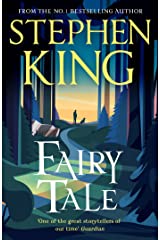
Fairy Tale by Stephen King

12/22: Fairy Tale by Stephen King

The blurb: Charlie Reade looks like a regular high school kid, great at baseball and football, a decent student. But he carries a heavy load. His mom was killed in a hit-and-run accident when he was seven, and grief drove his dad to drink. Charlie learned how to take care of himself - and his dad. Then, when Charlie is seventeen, he meets a dog named Radar and her ageing master, Howard Bowditch, a recluse in a big house at the top of a big hill, with a locked shed in the backyard. Sometimes strange sounds emerge from it.

Charlie starts doing jobs for Mr. Bowditch and loses his heart to Radar. Then, when Bowditch dies, he leaves Charlie a cassette tape telling a story no one would believe. What Bowditch knows, and has kept secret all his long life, is that inside the shed is a portal to another world.

King's storytelling in Fairy Tale soars. This is a magnificent and terrifying tale about another world than ours, in which good is pitted against overwhelming evil, and a heroic boy - and his dog - must lead the battle.

The review: The dedication at the start of this book reads "Thinking of REH, ERB, and, of course, HPL" and that tells you all you really need to know about what follows. For this is King's homage to the books he consumed in his youth, and the writing of Robert E. Howard, Edgar Rice Burroughs and especially H.P. Lovecraft. Indeed, you could say that Fairy Tale is King's take on Lovecraft's The Call of Cthulhu. Of course, King being King there are plenty of other fictional touchstones woven in too, from conventional fairytales like Rumpelstiltskin and The Three Little Pigs, to more recent fairytale allegories like Star Wars and The Hunger Games. He even throws in a subtle reference to his own Dark Tower series, for the Constant Readers among us to spot.

Also, King being King, the author has great fun with the fact that all the best fairytales have gruesome aspects. And we know he can do gruesome!

Anyway, I'd better write a review, hadn't I? This is King's umpteenth book, and he's racked up a pajillion sales, so he can write, we all know that. This is no exception: it's an enjoyable page-turner, that I rattled through quicker than anything I've read since ... well, since the last King novel I read. It won't win him many new fans but if you already like his work, you'll like this too. And that ought to be the end of the review, hadn't it? Well, it is, really, except for one observation. Like many of King's novels, Billy Summers being the most recent obvious comparator, this book pivots on a single moment about 30% of the way in; it's in the blurb, so there's no spoiler in me saying that moment is the point at which our hero Charlie goes through the portal in Howard's shed into another world. The world of make-believe, if you like - the land of fairytales. And the simple opinion I want to offer here is that, although the whole book is good, I preferred the section before that pivot, with Charlie rooted in normality, dealing with familial issues, high school issues, helping an old neighbour. It's got to the point, I think, where King is just a better prose fiction novelist than he is a horror/fantasy/supernatural writer. There. I said it. Don't @ me, as the influencers of the world might still say. But do comment, below.

The bottom line: King's take on a modern, yet traditional, fairytale, bears all his hallmarks, whilst also being an homage to those that came before him. Fans will lap it up - I did.

Since everything online is rated these days: ★★★★★☆

Tuesday, 8 November 2022

Twenty-two in '22: Pies and Prejudice: In Search of the North

I've set myself modest reading targets in each of the last three years and failed every time (I managed 17 books in '19, 11 in '20 and 18 in '21), so I'm determined to read twenty two books in 2022. I'll review them all here.

Pies and Prejudice by Stuart Maconie

11/22: Pies and Prejudice: In Search of the North by Stuart Maconie

The blurb: A Northerner in exile, Stuart Maconie goes on a journey in search of the North, attempting to discover where the clichés end and the truth begins. He travels from Wigan Pier to Blackpool Tower and Newcastle's Bigg Market to the Lake District to find his own Northern Soul, encountering along the way an exotic cast of chippy Scousers, pie-eating woollybacks, topless Geordies, mad-for-it Mancs, Yorkshire nationalists and brothers in southern exile.

The bestselling Pies and Prejudice is a hugely enjoyable journey around the north of England.

The review: Of all the many books I've read in recent years, one I've felt most connected to is The Nanny State Made Me, Maconie's paean to the public sector - I wrote about it last year. Add to that Maconie's relaxed, conversational style and my predisposition towards him based on his 6 Music output, and I was ready to enjoy this book. And I did ... just not as much as I had hoped and expected. Let me explain why.

All the Maconie staples are here - the aforementioned conversational tone, the anecdotes, the great dollops of nostalgic recollection and the occasional light dusting of political opinion. And the subject matter - essentially an Englishman abroad, if abroad means everywhere north of the Watford Gap (which, as it turns out, is not where you might think) - is a rich vein for Maconie to mine. The book is successful on many levels, mostly making me want to visit places I haven't been and love places I already love even more. And isn't that the primary aim of this kind of book. Oh, and I even learnt stuff too, always a bonus.

So what's the problem?

Well, it's this. At times Pies and Prejudice feels like a history book. It was only written in 2006 but, given the many social and political upheavals there have been since then, it feels like not just the North but the UK of then was a different country. A better country, for that matter. And this feeling increasingly coloured my enjoyment of the book. That's not Maconie's fault, of course - he couldn't have foreseen the spectacular nosedive pretty much everything in the UK has taken since then, no-one could. But it is a fact for a reader in 2022 - this reader, at least. At one point, Maconie quotes an article a certain B. Johnson wrote in The Spectator, and dismisses it as damaging, inflammatory and ultimately ignorant fluff written by an entitled Southern buffoon. All of which is true, of course, but it made me grind my teeth to read it; I had to set the book aside for a bit, and wonder how we had let things come to this. Where did it all go wrong?

I'm conscious this isn't much of a review, so I will add that Maconie's prose keeps the pages turning, the subject matter is genuinely interesting, and it's all told in an engaging, often humourous style. It's just that it made me think it should be subtitled "In Search of Albion" instead.

The bottom line: another well-pitched domestic travelogue from Maconie, but feels like a historical document now.

Since everything online is rated these days: ★★★★☆☆

Friday, 23 September 2022

Twenty-two in '22: Ramble Book

I've set myself modest reading targets in each of the last three years and failed every time (I managed 17 books in '19, 11 in '20 and 18 in '21), so I'm determined to read twenty two books in 2022. I'll review them all here.

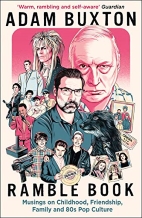
Ramble Book by Adam Buxton

10/22: Ramble Book by Adam Buxton

The blurb: The long-awaited, rambling, tender, and very funny memoir from Adam Buxton

Ramble
/ˈramb(ə)l/
Verb

  1. walk for pleasure in the countryside.
    'Dr Buckles and Rosie the dog love rambling in the countryside.'
  2. talk or write at length in a confused or inconsequential way.
    'Adam rambles on about lots of consequential, compelling and personal matters in his tender, insightful, hilarious and totally unconfused memoir, Ramble Book.'
Ramble Book is about parenthood, boarding school trauma, arguing with your partner, bad parties, confrontations on trains, friendship, wanting to fit in, growing up in the 80s, dead dads, teenage sexual anxiety, failed artistic endeavours, being a David Bowie fan; and how everything you read, watch and listen to as a child forms a part of the adult you become. It’s also a book about the joys of going off topic and letting your mind wander.

The review: I've started a lot of past book reviews by saying that I'm predisposed to liking X or Y because I am a long-time fan of the author and have enjoyed their other work. Well, that's not the case here. It's not that I'm not a fan of Buxton, its just that I haven't really consumed much, if anything, of his previous output - not TV, not podcasts, nothing, save for his Cobbler Bob YouTube video. I don't know how I've got to this point in my life without The Adam and Joe Show, for example - thinking back, I think it struck a chord with people just a couple of years younger than me - and I was very slow to embrace podcasts. Anyway, for whatever reason I was not up to speed on Buxton or anything he's done previously. So why did I feel the need to pick up this book?

Well, on the simplest level it was the tagline: "Musings on childhood, friendship, family and 80s pop culture." Buxton would have been two years above me at school, age-wise, and so I figured his musings on all those things might be close enough to mine to make for an interesting read. And I was right.

Sure, there are plenty of differences between Adam's life and mine that might have made his nostalgic ramblings of less interest: he went to public school, and fixated on Bowie and Star Wars, for starters, all different to me. But he captures the essential experience of growing up in the 70s and 80s very well, and of course that's relatable.

What this book's blurb doesn't make enough of, though, is the family aspect of Buxton's rambles. There are very entertaining diversions into the mechanics of his married life, framed as lists of things he and his wife have argued about. That's relatable too, of course, even if, like me, you're not actually married. But the real heart of this book, beyond detailing the author's reaction to each new Bowie album or the relative merits of The Empire Strikes Back, is Adam's complicated relationship with his father. This is gently explored throughout the book, from recollections of an austere, slightly remote figure in the author's childhood who was, unbeknownst to Buxton at the time, crippling himself financially to educate the kids privately, to the subsequent integration of "BaadDad" into Adam and Joe's TV work, right through to his father moving in with Adam's family in his last months, waiting to die. Its all there, sometimes between the lines, but all there. It's the most affecting aspect of the book.

A note on the format - it's not called Ramble Book for nothing. Buxton breaks his narrative flow at the drop of a hat to go off on tangential rambles, preferring these to be in boxes within the main text rather than in footnotes. That might sound potentially annoying but it works, and lends the book a conversational air.

I can't say this has turned me into an Adam Buxton fan - I don't feel the need to suddenly subscribe to everything he does, or scour YouTube to take in his back catalogue - but I did enjoy this book. I think anyone of a broadly similar age would too, as would anyone who has made the transition from child to parent, and whose own parent is now in the child role. That probably sounds a bit deep, a bit serious for what is a fairly light-hearted, entertaining book... but it's true.

The bottom line: nostalgia-fest for readers of a certain vintage, with some pathos peaking out from between the rambles.

Since everything online is rated these days: ★★★★★☆
Thursday, 18 August 2022

Twenty-two in '22: I, Partridge

I've set myself modest reading targets in each of the last three years and failed every time (I managed 17 books in '19, 11 in '20 and 18 in '21), so I'm determined to read twenty two books in 2022. I'll review them all here.

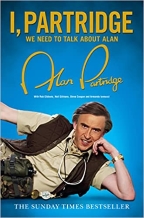
I, Partridge by Alan Partridge

9/22: I, Partridge: We Need to Talk About Alan by Alan Partridge

The blurb:

Journalist, presenter, broadcaster, husband, father, vigorous all-rounder: Alan Partridge. Star of action blockbuster Alpha Papa; a man with a fascinating past and an amazing future.

Gregarious and popular, yet Alan’s never happier than when relaxing in his own five-bedroom, south-built house with three acres of land and access to a private stream. But who is this mysterious enigma?

Alan Gordon Partridge is the best – and best-loved – radio presenter in the region. Born into a changing world of rationing, Teddy Boys, apes in space and the launch of ITV, Alan’s broadcasting career began as chief DJ of Radio Smile at St. Luke’s Hospital in Norwich. After replacing Peter Flint as the presenter of Scout About, he entered the top 8 of BBC sports presenters.

But Alan’s big break came with his primetime BBC chat show Knowing Me, Knowing You. Sadly, the show battled against poor scheduling, having been put up against News at Ten, then in its heyday. Due to declining ratings, a single catastrophic hitch (the killing of a guest on air) and the dumbing down of network TV, Alan’s show was cancelled. Not to be dissuaded, he embraced this opportunity to wind up his production company, leave London and fulfil a lifelong ambition to return to his roots in local radio.

Now single, Alan is an intensely private man but he opens up, for the second time, in this candid, entertaining, often deeply emotional – and of course compelling – memoir, written entirely in his own words. (Alan quickly dispelled the idea of using a ghost writer. With a grade B English Language O-Level, he knew he was up to the task.)

He speaks touchingly about his tragic Toblerone addiction, and the painful moment when unsold copies of his first autobiography, Bouncing Back, were pulped like ‘word porridge’. He reveals all about his relationship with his ex-Ukrainian girlfriend, Sonja, with whom he had sex at least twice a day, and the truth about the thick people who make key decisions at the BBC.

A literary tour de force, I, Partridge: We Need to Talk About Alan charts the incredible journey of one of our greatest broadcasters.

The review: first things first, this isn't actually written by Alan Partridge, what with him being - spoiler alert - a fictional construct. Rather, this has been penned by long-time Partridge writers Neil and Rob Gibbons, with Armando Iannucci and Steve Coogan. So you're in safe hands.

Next, of course, is the fact that this is a parody of a memoir, in the same way that Partridge himself is a parody of ... well, so many failed media types, and latterly/inadvertently Richard Madeley. The book is basically a comedic pastiche of awful celebrity memoirs, the sort that flood the shelves of Waterstone's and W H Smith in the run-up to Christmas. And the writing is good enough that it works on that level, as you would expect from these authors. But - and it's a reasonably sized but - it only really works if the reader is sufficiently well versed in Alan's backstory.

This is because, as you would imagine, Alan is a terrifically unreliable narrator. There is much humour to be had, then, from Alan's self-serving recollections of events with the version of those same events that you are already familiar with from On The Hour, The Day Today, KMKY, I'm Alan Partridge, and so on. The comedy comes, not from the events themselves, but from Alan's after-the-event reinterpretations that, coincidentally always paint him in a good light ... needless to say, in his version Alan nearly always has the last laugh.

Another fine source of humour is delivered by Alan's repeated attempts to show how little certain past events have upset or stayed with him, only for the subtext to reveal otherwise.

I would say it's all here but it isn't: the events of Alpha Papa are not covered (despite what the blurb suggests), and it's not up-to-date enough to cover This Time either. That said, pretty much everything else that has seen Coogan as Partridge, on radio or TV, gets woven neatly into the story; there's a fine line to be trodden here between touching on past output and rehashing too much, so I'm pleased to report that the authors get the balance pretty much bang on throughout.

Of course, riffing on past output is both the book's greatest strength and biggest weakness. Fans will delight in the details, congratulate themselves on picking up references and laugh again as favourite moments from Alan's past get the memoir treatment. However, if you are not a consumer of all things Partridge, well, you're going to struggle a bit, aren't you? For you, it's just made-up nonsense about a made-up person.

The bottom line: a well-constructed and genuinely funny read for existing Partridge aficionados, but understandably unlikely to win over any new fans.

Since everything online is rated these days: ★★★★☆☆

Tuesday, 26 July 2022

Twenty-two in '22: Boy About Town

I've set myself modest reading targets in each of the last three years and failed every time (I managed 17 books in '19, 11 in '20 and 18 in '21), so I'm determined to read twenty two books in 2022. I'll review them all here.

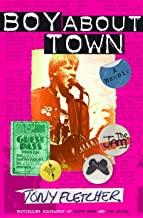
Boy About Town by Tony Fletcher

8/22: Boy About Town by Tony Fletcher

The blurb:

As a boy, Tony Fletcher frequently felt out of place. Yet somehow he secured a ringside seat for one of the most creative periods in British cultural history.

Boy About Town tells the story of the bestselling author’s formative years in the pre- and post-punk music scenes of London, counting down, from fifty to number one: attendance at seminal gigs and encounters with musical heroes; schoolboy projects that became national success stories; the style culture of punks, mods and skinheads and the tribal violence that enveloped them; life as a latchkey kid in a single-parent household; weekends on the football terraces in a quest for street credibility; and the teenage boy’s unending obsession with losing his virginity.

Featuring a vibrant cast of supporting characters (from school friends to rock stars), and built up from notebooks, diaries, interviews, letters, and issues of his now legendary fanzine Jamming!, Boy About Town is an evocative, bittersweet, amusing and wholly original account of growing up and coming of age in the glory days of the 1970s.

The review: this book was passed to me by The Man Of Cheese; he attached a note that observed "Some parts of this struck a chord with out younger (and finer!) years." And that's all the review really needs to say, for whilst this is Tony Fletcher's memoir, the joy in reading it comes from recognition and identification. Okay, Tony is six or so years older than TMOC and myself, so the bands and scenes discussed in Boy About Town don't align exactly with those that we enjoyed in our youth but the feelings, the interests, the passions - they are pretty much identical. Reading this book, then, gives Proustian rush after Proustian rush.

For someone more famed for writing highly regarded rock biographies, Fletcher still hits the mark writing about himself. There is a blunt honesty in his recollections of youth and teenage years - no sugar-coating, no sanitising. This book is all the better for it. And of course we can all identify with falling in love with bands - The Who first, for Tony, and then The Jam. That feeling of them being your band - we've all been there, haven't we? (Who am I kidding - I'm still there).

What distinguishes Fletcher's memoir, indeed sets it apart from other "my youth in fandom" books, is the turn his young life took when he decided to start a fanzine. It's easy, now, to think of fanzines as little more than A4 photocopied blogs, but they were so much more important then, when the music press was so narrow, and other exposure (TV and radio) narrower still. Tony started Jamming! at 13, running off a hundred copies on a school mimeograph. By the time it wound up, Jamming! sold 30,000 copies a month. Incredible.

What's even more incredible is the access the young Fletcher got to his heroes. He met Keith Moon, interviewed Pete Townshend. And then there was Paul - an exchange of letters led to friendship with Weller, and the sort of access to the band that saw Fletcher and his mates hanging out at the recording studio with the band, even hearing new material before the mainstream music press. And as a thirteen year old fanzine editor, routinely finding his way backstage at all manner of gigs, in all manner of venues - again, incredible. An astonishing time to be a music fan. Oh, and a parallel thread tells of the author's aspirations with his own band - he was a very busy young man.

For all the amazing experiences Fletcher has growing up in the seventies, the more mundane or regular aspects of his teen life are also captured - football, school, girls, parties, drinking and smoking, fighting, all of it. I rather suspect this will appeal to male readers more than female, but it's all relatable, and harkens back to a simpler, happier time. I loved reading it, even though it also made me feel old, stale and well past my prime.

As I hinted earlier, Fletcher went on from his fanzine beginnings to establish a career writing, including pretty much definitive works on Keith Moon and REM. He also (eventually) had minor success with his band, Apocalypse, enough to warrant a "best of" from Cherry Red some years later. My only real criticism of this book then is that it leaves unfinished business, ending as it does with Fletcher playing a valedictory gig at his school as he finishes the fifth form, and then finally getting laid at a party. But there's more I want to know - how did Jamming! go on to get so big, for starters? What happened with the independent record label he set up and ran with/for Paul Weller? And how did Apocalypse go from playing pubs and a school hall to releasing singles? All that and more. I guess what I'm saying is, I enjoyed Boy About Town so much, I'm ready for volume two.

The bottom line: a very enjoyable read that is equal parts nostalgia-inducing memoir and first-hand account of a fascinating time in modern music - bring on the next instalment!

Since everything online is rated these days: ★★★★★☆
Footnote: you can read more about Tony, his books and the history of Jamming! at his Substack plus, after not quite breaking through with Apocalypse, he's making music again, as part of The Dear Boys. Yes, he remains that much of a Moon fan...

Saturday, 18 June 2022

Twenty-two in '22: Eleven

I've set myself modest reading targets in each of the last three years and failed every time (I managed 17 books in '19, 11 in '20 and 18 in '21), so I'm determined to read twenty two books in 2022. I'll review them all here.

Eleven by Mark Watson

7/22: Eleven by Mark Watson

The blurb:

Xavier Ireland is a radio DJ who by night listens to the hopes, fears and regrets of sleepless Londoners and by day keeps himself very much to himself - until he is brought into the light by a one-of-a-kind cleaning lady and forced to confront his own biggest regret. This is a tale of love, loss, Scrabble and six degrees of separation, asking big questions about life and death, strangers and friends, heartache and comfort, and whether the choices we don't make affect us just as powerfully as those we do.

The review: I am predisposed to liking this book. After all, I read Contacts by Watson last year, and gave it a healthy five stars out of six in my review. In 2018 I made The Knot my book of the year (even though it was published in 2012). And I've seen Mark in various comedy settings doing his "day job" more often than I can easily recall. And I do like Eleven ... it's just that it's not as good as it could have been. Let me explain why.

Sure, all the hallmarks of Watson's best writing are in place - a relatable, likeable, everyman protagonist, a free-flowing prose style that helps the pages practically turn themselves, and a gentle humour of the wry-smile-inducing variety. As a result, Eleven is a book I rattled through in three days, helped, no doubt, by train journeys to while away. But there are issues; for a start, some of the characterisation could best be described as of the cookie-cutter variety. For example, Pippa, the cleaning lady who triggers a change in our hero's outlook is almost a Geordie-by-numbers; worse still is the depiction of Xavier's friend and radio co-host Murray who, I am sorry to say, borders on cliché as the hapless, overweight, stammering fool with bad hair and a shocking lack of self-awareness. Ditto Julius, the overweight, bullied schoolboy from a poor background who is also a maths prodigy. I'm not saying these kinds of characters don't exist in real life - it's just that for them to tick every box on their archetype's checklist jars, with this reader at least.

Then there is the POV - omniscient present-tense is a tough gig to pull off, especially when it is third-person, rather than first. When the narrator drops in little details about what will happen to minor characters in three, five, ten years time, well, I get it, Mark's trying to highlight the interconnectivity of everything ... it's just that this makes the narrator seem God-like, and I'm an atheist. Your mileage will, as they say, undoubtedly vary, but for me this was a problem at times, and occasionally disrupted the narrative flow.

And then there is the flexing of vocab muscles, visibly stretching to use unusual or unexpected verbs to describe events. Again, I know what Watson's doing here, I think, in trying to imbue seemingly ordinary events with portent through the use of carefully chosen verbs but when I got to the point where picnics were "provoked" by sunshine, I just wanted him to stop. And I'm happy to report, from reading subsequent books by Watson, that he has.

That said, there is still much to enjoy here, and I'm glad I read it. No doubt you would be too. As I've mentioned, the pace fairly rattles along, and Xavier Ireland is a character that the reader invests in, even to the extent of wanting to give him a shake at times, and that has to be a good sign. One final criticism, though, might be that the book's ending is a little too foreshadowed, and you get the feeling that even Watson realised this and tweaked it ever so slightly - for the better, I am happy to report.

The bottom line: even with the occasional frustrations this is a genuinely enjoyable read, but would have benefited from better characterisation and a tougher editor. It's good, but he's written better since.

Since everything online is rated these days: ★★★★☆☆

Tuesday, 24 May 2022

Twenty-two in '22: The World of Cycling According to G

I've set myself modest reading targets in each of the last three years and failed every time (I managed 17 books in '19, 11 in '20 and 18 in '21), so I'm determined to read twenty two books in 2022. I'll review them all here.

The World of Cycling According to G by Geraint Thomas

6/22: The World of Cycling According to G by Geraint Thomas

The blurb:

Like no other cycling book, from no other rider - Britain's cycling star shares his unique take on the world of cycling.

Sit back or saddle up as double Olympic gold medallist and multiple world champion Geraint Thomas gives you a warts and all insight into the life of a pro cyclist. Along the way he reveals cycling's clandestine codes and secret stories, tales from the peloton, the key characters like Wiggins, Hoy and Cav, the pivotal races and essential etiquette.

Geraint Thomas is treasured for treating his sport just as the rest of us see it: not a job but an escape and an adventure. He's been with Team Sky since its inception, and is one of our most successful and gifted track and road riders, but Geraint reminds us that getting on the bike still puts a smile on your face and fire in the legs like nothing else.

Funny, informative, diverting and droll, this is a joyful celebration of the world of cycling.

The review: I know what you're thinking: oh god, here it is, the point at which the wannabe cyclist and Strava enthusiast lets his hobby bleed through from his sideline bike blog to the "main" blog, and thereby bores us all with talk of chainsets, carbon frames, and KOMs. Right?

Well, not really, you'll be relieved to hear. Because although this is a book by a cyclist, about cycling, I'd argue that you need only a passing awareness of Geraint Thomas and the world of elite cycling to enjoy this book. If you've paid just enough attention to the sports pages for the last ten years to know how much success Britain has had in this field, or any of the names Wiggins, Hoy, Cavendish and Froome ring a bell with you, well, that's enough for you to get something out of this book.

Geraint Thomas, for the uninitiated, is a gold-medal winning track and road cyclist who, since writing this book, also won the Tour de France with Team Sky (the sixth British win in seven years). He's done it all, basically - and, brilliantly, he's able to convey it here, in a humourous and informative way that appeals to the Stravanauts and non-cyclists alike.

Well, I say he ... but Geraint has had some help, in the shape of sports journalist Tom Fordyce. In his acknowledgements, Geraint describes this help thus: "... obviously a huge thanks to Tom Fordyce for listening to my stories, putting them all together and dealing with all my questions."

But the fact that this book is a collaborative effort (or ghost-written, depending on your perspective) needn't put you off. The prose tone here is consistent with the version of Thomas you see in interviews, as is the humour. Fordyce has captured the man, basically. And the result is very readable.

The book is structured in chapters that look at specific aspects of cycling, namely: "Living It" (much here for the amateur); "People" (chapters on each of the big names in British cycling but also on the unsung heroes in the team); "Doing It" (the actual rides and events); "Places" (imagine a series of stadium tours if you're a football fan); "Feeling It" (handling the physical and mental impact of cycling); "The Rules" (do's and don't's for cyclists of all abilities); and "Bossing It" (what it's really like riding for the best team, in the top events). It's a great structural idea - you could almost be reading a series of (admittedly lengthy) blog posts, which makes the book very digestible, whether you know your Campagnolo from your Shimano, your soigneur from your directeur sportif, or not.

The bottom line: you'll enjoy this more if you cycle semi-seriously, but this is an enjoyable memoir for any fan of sports biographies (even if there isn't much actual biography in it).

Since everything online is rated these days: ★★★★★★ for cyclists, ★★★★☆☆ for everyone else

Friday, 6 May 2022

Twenty-two in '22: Headhunters

I've set myself modest reading targets in each of the last three years and failed every time (I managed 17 books in '19, 11 in '20 and 18 in '21), so I'm determined to read twenty two books in 2022. I'll review them all here.

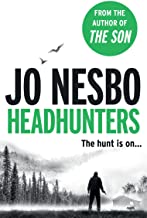
Headhunters by Jo Nesbo

5/22: Headhunters by Jo Nesbo

The blurb:

LIE.

Clever, wealthy, married to a beautiful woman: Roger Brown has it all. And his sideline as an art thief keeps him busy when his job as a corporate headhunter gets dull.

STEAL.

Then his wife introduces him to Clas Greve. Ambitious and talented, he's the perfect candidate for a top job Roger needs to fill - and the priceless painting he owns makes him the perfect target for a heist.

MURDER?

But soon Roger finds out that there's more to Greve than meets the eye, and it's not long before the hunter becomes the hunted...

The review: I'll admit to being a little wary of reading this book. I saw the Norwegian language film adaptation of this when it came out at the cinema in 2013, and bought the DVD on release. It remains one of my favourite films not just of that year but of the 21st Century, a gripping thriller that repeatedly blind-sides the viewer, with a fantastic/incredible story that remains plausible, and with a brilliant anti-hero in logical, analytical recruitment consultant with a chip on his shoulder Roger Brown. I love it, and wondered whether I could enjoy the source material as much.

I needn't have worried. Jo Nesbo is most famous for his series of Harry Hole crime novels that, in turn, helped create a buzz around what came to be known as Scandi noir, a buzz that persists. But this isn't a Harry Hole story - rather, it's a standalone thriller with a very different sort of hero: Brown is a headhunter in the HR sense, and the best at what he does. He just happens to also dabble in the occasional fine art theft. That's where the somewhat lazy parallel to The Thomas Crown Affair Nesbo's publishers attempt over at Amazon comes from ... but Brown is far more interesting than either McQueen's or Brosnan's big-screen playboy thieves, because he is far more deeply flawed. Insecure about his height, insecure about his stunning wife, insecure about his parents, insecure about just about everything, and with more than a little OCD to boot. The parallel I'd draw is closer to Patrick Bateman, but without the psychopathy, and much less killing...

Also ... well, it's a question I have to ask when the author is writing in another language from the one I'm reading it in: is the concision and effect of the prose down to the author, or the translator? Headhunters is translated from Norwegian to English by Don Bartlett, and he's done a cracking job, as far as I can tell. Surely, in the same way that a good editor can immeasurably improve the quality of an author's work (Gordon Lish, for example), a translator must have a significant part to play in a foreign language novel's success in English.

Anyway, here's a passage I bookmarked that highlights both the protagonists character and the author's (and translator's) direct and effective prose style - here, Brown has just realised that not only has his wife been cheating on him, but also may have murderous intent:

It was like being embraced by a stranger. Everything was different with her now, even her smell. Or was it his? It was revolting. Her hand went back and forth in a slow massaging movement as if she were shampooing me, as if her enthusiasm for my hair was reaching new heights at precisely that moment. I felt like hitting her, hitting her with a flat hand. Flat so that I could feel the contact, the smack of skin on skin, feel the pain and the shock.

Instead I closed my eyes and let her do it, let her massage me, soften me, please me. I may be a very sick man.

If that isn't enough to get you interested in Brown's story and/or Nesbo's writing, here's another passage I bookmarked, from much later in the story, as Roger leaves his sometime-lover Lotte's flat:

In the dark of the bedroom I could just make out the contours of her body under the sheet. I resisted a sudden impulse: to get undressed, slip back into the bed and snuggle up to her. Instead I felt an odd sensation that everything that had happened had not been about Diana, but about me. I closed the bedroom door softly and left. Just as when I had arrived, there was no one on the staircase to greet. Nor when I got out onto the street did I meet anyone who would respond to my friendly nods; no one looked at me or acknowledged my existence in any other way. Now it had dawned on me what the sensation was: I didn't exist.

It was time to find myself again.

I'm not aware of other books featuring Brown - this is very much a standalone tale, and that's a shame because he's such an excellent character, and Nesbo develops him brilliantly, aided by the first person narration. All I can say is that I would very happily read other tales about the headhunter, and will instead have to content myself with exploring Nesbo's other work. In the meantime, I recommend this to you very highly, especially if suspenseful, plot-twisting thrillers are your thing.

The bottom line: direct, engaging, page-turning prose that brings a twisty thriller and a memorable character vividly to life - how I wish this wasn't a standalone novel!

Since everything online is rated these days: ★★★★★☆
Saturday, 2 April 2022

Twenty-two in '22: Kiss Kiss

I've set myself modest reading targets in each of the last three years and failed every time (I managed 17 books in '19, 11 in '20 and 18 in '21), so I'm determined to read twenty two books in 2022. I'll review them all here.

Kiss Kiss by Roald Dahl

4/22: Kiss Kiss by Roald Dahl

The blurb: In Kiss Kiss you will find eleven devious, shocking stories from the master of the unpredictable, Roald Dahl.

What could go wrong when a wife pawns the mink coat that her lover gave her as a parting gift? What happens when a priceless piece of furniture is the subject of a deceitful bargain? Can a wronged woman take revenge on her dead husband?

In these dark, disturbing stories Roald Dahl explores the sinister side of human nature: the cunning, sly, selfish part of each of us that leads us into the territory of the unexpected and unsettling. Stylish, macabre and haunting, these tales will leave you with a delicious feeling of unease.

The review: first off, I'm aware of the criticisms of Dahl that have emerged in recent years: racist, anti-Semite, misogynist. I'm not here to review the man though, and even if I was I'm not really sure how you can judge a man born in 1916 by today's standards. Maybe it's just as well that I'm only here to review the book.

Lucky for us all, then, that it's a fine book. Eleven short stories, all told with the relaxed prose style and eye for detail that made his children's fiction so memorable. But these are very much stories for adults. One of Dahl's "rules" for his stories was that bad things happen and they certainly do here, ranging from the "Oh no!" variety right through to the murderous. Lovers of a twist ending will be well sated by this collection, and it will come as no surprise to learn that many of the stories featured here made it onto television as Tales of the Unexpected.

Some of the more memorable Tales featured here include William and Mary, the excellent Way Up To Heaven and the darkly comic Mrs Bixby and the Colonel's Coat, all of which his detractors might say shine a light on, if not misogyny, then at least Dahl's unusual perspective on women. But that's rubbish, frankly; they provide an equally skewed view of men (especially in Edward the Conqueror). Maybe he was a misanthrope, rather than a misogynist.

Whatever. There's dark humour here too, none more so than in Parson's Pleasure, and the plain unsettling - I remember Royal Jelly vividly from the television adaptation, and it is equally effective on paper. And interestingly, the book ends with a short story entitled Champion of the World, wherein lies the kernel of an idea that, sixteen years after this was written, would grow into the children's novel Danny, the Champion of the World, my favourite as a kid.

I should give a special mention to The Landlady, which open this collection; what started life as Dahl's attempt to write a ghost story ended up without a supernatural aspect, but ticks every other Tales of the Unexpected criteria: macabre, unsettling, and with an uneasy twist ending. From a writer's perspective, it's an object lesson, with detail drip-fed, a real sense of place, and only as much detail as is necessary. A joy to read too, albeit a dark joy that lingers long in the mind...

What else can I tell you? Some of these tales may feel a little dated in setting and dialogue, but the essentials plots and themes are timeless. Dahl knew his way around a short story, and the eleven contained herein demonstrate that time after time. A harsh critic might argue that some of the twist endings are telegraphed a little too much, but really that's just about the only criticism of this collection ... and it is being harsh. There is so much to enjoy here, and so what if you guessed an ending - well done you. It was still fun getting there though, wasn't it?

The bottom line: a short-story masterclass that will suit anyone with a taste for the unsettling or macabre, and lovers of twist endings.

Since everything online is rated these days: ★★★★★☆

Wednesday, 23 February 2022

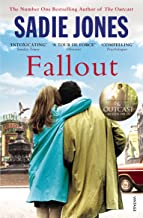
Twenty-two in '22: Fallout

I've set myself modest reading targets in each of the last three years and failed every time (I managed 17 in '19, 11 in '20 and 18 in '21), so I'm determined to read 22 books in '22. I'll review them all here.

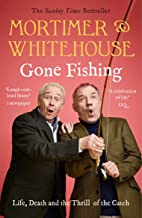
Mortimer & Whitehouse: Gone Fishing

3/22: Fallout by Sadie Jones

The blurb: London 1972. Luke is dazzled by the city. It seems a world away from the provincial town he has fled along with his own troubled past, and his new life is unrecognisable – one of friendships forged in pubs, candlelit power cuts, and smoky late-night parties.

When Nina, a fragile and damaged actress, strays into his path, Luke is immediately drawn to her and the delicate balance of his new life is threatened. Unable to stay away from her, Luke is torn between loyalty, desire and his own painful past, until everything he values, even the promise of the future, is in danger…

The review: I'm trying to think when I last finished a book and had such a strong feeling of "God, I wish I'd written this." It hasn't happened for a long time - I think maybe Cormac McCarthy was the last author to prompt that sort of reaction in me, when I read No Country For Old Men. Anyway, I guess that's the TLDR: this book is so bloody good, I wish I'd written it myself. Or, at the very least, that I could write like this.

You've read the blurb, so let me add to it that Luke's "new life" is on the fringe of London's theatre scene, and Fallout is a rich evocation of that world, from the sex-comedy farce of Soho, through the serious theatre of the West End and on to what would now be called start-ups, theatre in the margins. It's in the latter that Luke and his friends operate. Understandably, Luke's friends are not mentioned in the brief blurb, but Paul and Leigh, a couple who are themselves embedded in the theatre, are so important to the story. The changing nature of the triangle between these three is delicately played out by Jones over the course of the book; that all three remain sympathetic throughout is testament to the storytelling prowess on display here.

Luke's relationship with Nina is cleverly teased from the outset too; they come so close to meeting before they eventually do, it is almost like they are star-crossed, destined to irreversibly change each other's lives. But are they destined to be together? Well, I want to avoid spoilers, as ever, but let's just say that this is a Sadie Jones novel, and she doesn't deal in the obvious or pat endings. Make of that what you will. What I will say is that the actual ending, which plays out like an epilogue, is very satisfying. Beyond that, you'll just have to read it all for yourself.

Also worthy of note is Jones's treatment of Luke's parents; they are scarcely in the book as active characters, especially his mother, who is basically only in the opening scene ... and yet they are there throughout, a brooding presence in Luke's life, a permanent blurring of his worldview. Not once does this feel repetitious, or clichéd, or a trope, so deftly is it written.

Talking of deft writing, the evocation of the early 70s feels spot on - I could see the cigarette smoke in every pub and bar, I could feel the damp on the walls, I was braced for unexpected power cuts. No WhatsApp messages or Facebook alerts for these characters - the book totally immerses you in a world where illicit liaisons were reliant on landline phonecalls, even having some change for the phone box. So complete is this evocation of the recent past that it became increasingly easy for me, as a contemporary reader, to turn off my phone, shut my laptop and go back to the early 1970s - how hard I found it to put the book down suggests I wanted to stay there too...

But of course the real story here, beyond the setting and the supporting cast, is that of love in all its many forms: idealised, platonic, lustful, doomed, familial, illicit, forbidden and destructive; love of a person, a place, a thing; and the most potent love of all, that which endures despite everything else. Is there anything that can be more dramatic, ecstatic or tragic than the fallout from such diverse, unplanned, unique loves?

I must also highlight the author's uncanny ability to say more in a sentence than some writers do in a paragraph, or even a page. You know that concept of le mot juste? Well Sadie has that nailed. Example, you say? Well, here's one character (I won't say who, for fear of spoilers) describing their partner's feelings for them: "Whose love was like someone completing a task they had set themselves." It's perfect, isn't it? You know exactly how person A sees B's love for them, how B sees it, and the sad resignation and defeat it all evokes in A. All from one line, twelve words, sixteen syllables. That's all it takes, if you can write with the economy, concision and accuracy of the prose on display here.

The bottom line: supremely well-written tale of love, lust, lies and liaisons, set against a beautifully-realised evocation of early 70s theatreland, and the best book I've read in an absolute age.

Since everything online is rated these days: ★★★★★★

Monday, 31 January 2022

Twenty-two in '22: Mortimer & Whitehouse: Gone Fishing

I've set myself modest reading targets in each of the last three years and failed every time (I managed 17 books in '19, 11 in '20 and 18 in '21), so I'm determined to read twenty two books in 2022. I'll review them all here.

Mortimer & Whitehouse: Gone Fishing

2/22: Mortimer & Whitehouse: Gone Fishing by Bob Mortimer and Paul Whitehouse

The blurb: Two comedy greats talk life, friendship and the joys of fishing...

Bob Mortimer and Paul Whitehouse have been friends for 30 years, but when life intervened, what was once a joyous and spontaneous friendship dwindled to the odd phone call or occasional catch up. Then, Glory Be! They were both diagnosed with heart disease and realised that time is short. They'd better spend it fishing...

So they dusted off their kits, chucked on their waders and ventured into the achingly beautiful British countryside to fish, rediscover the joys of their friendship and ruminate on some of life's most profound questions, such as: How did we get so old? Where are all the fish? What are your favourite pocket meats? What should we do if we find a corpse?

Following the success of the BBC's Mortimer & Whitehouse: Gone Fishing series, this wonderful book by two lifelong friends is a love letter to the joys of angling, the thrill of the catch and the virtue of having a right daft laff with your mates. On the fish, the equipment, the food, and the locations, Gone Fishing is the perfect book for fans of Bob Mortimer, Paul Whitehouse and for anyone who wants to read a brilliantly written and endlessly funny joint memoir on life, friendship and joys of fishing.

The review: I bought The Man Of Cheese a copy of Bob Mortimer's wildly popular autobiography And Away for Christmas; so popular is it, in fact, that my gift was the third copy TMOC received over the festive period. I've since remedied that fail with a far better present, but what I should really have bought, if I'd wanted to be a bit more original, is this. For whilst Mortimer & Whitehouse: Gone Fishing does have an autobiographical element, and does tie in nicely with the comfort-viewing TV series that shares its name, it's principally a book about fishing, and the joys thereof. Oh, and being with your mate too, but I'll come on to that.

There's a very clear split in the book regarding who has written each piece, and clearly Paul does most of the heavy lifting when it comes to writing about fishing, its history, techniques, and types of fish. Now I am not an angler - it's thirty years or more since I last sat at the riverside with The Man Of Cheese and hooked roach after roach out of the excellently named River Wantsum. But that in no way diminished my enjoyment of this book. As Bob is quick to point out, a day fishing is about more than the fish, it's about being outdoors with your mate, enjoying the peace and beauty of a rural setting, talking nonsense (or, perhaps, not talking at all), maybe retiring to a nice pub afterwards... sounds good, doesn't it? And that's a strength of this book - it enthuses about the attendant joys of angling so much that it would make anyone fancy a go.

If Paul carries the fishing aspect of the book, Bob carries the humour - that's not to say Paul's sections aren't funny, because they are, but they're also weighted towards the fishing. Bob doesn't have Paul's fishing experience, so compensates with humour. I particularly enjoyed his comedy names for the dishes he describes in his section on heart-healthy riverside cooking options (tuna Melanie with trapped potatoes, anyone? Or Boots McFoolish breakfast porridge?)

The thing is, this isn't a life-changing book. It isn't going to dazzle you with its prose, nor - for all its humour - is it a comedy classic. A totally objective review would probably be for me to award it four out of the possible six stars, describe it as "serviceable" or some other faint praise and summarise it as a satisfactory commercial exercise, cashing in on the success of the TV show. All of those things are true. But it's more than that, of course. Yes, it's a love letter to fishing and an outdoor life, and that's a big part of the appeal. But it's even more than that too. Mostly, for this reader at least, Gone Fishing is the anatomy of a friendship between two men, one that started in youth and has matured in middle age. At a time when what it is to be a man is so ill-defined, lambasted or pilloried, it is truly rewarding to see a genuine, heartfelt and lasting male friendship served up on paper, for us all to enjoy. And for that, it is more than the sum of its parts, and warrants an extra star.

The bottom line: come for the fishing, stay for the friendship - a life-affirming read.

Since everything online is rated these days: ★★★★★☆

Thursday, 6 January 2022

Twenty-two in '22: Dolly

I've set myself modest reading targets in each of the last three years and failed every time (I managed 17 books in '19, 11 in '20 and 18 in '21), so I'm determined to read twenty two books in 2022. I'll review them all here.

Dolly by Susan Hill

1/22: Dolly by Susan Hill

The blurb: The remoter parts of the English Fens are forlorn, lost and damp even in the height of summer. At Iyot Lock, a large decaying house, two young cousins, Leonora and Edward are parked for the summer with their ageing spinster aunt and her cruel housekeeper. At first the unpleasantness and petty meannesses appear simply spiteful, calculated to destroy Edward's equanimity. But when spoilt Leonora is not given the birthday present of a specific dolly that she wants, affairs inexorably take a much darker turn with terrifying, life destroying, consequences for everyone.

The review: I like a good ghost story and, since Susan Hill is best known for the wildly successful Woman in Black, I felt sufficiently inspired to take a punt on a premise, cover and blurb that I wouldn't normally choose. Since I found the book in one of those "take a book, leave a book" community libraries that have sprung up everywhere in recent years (you know the sort of thing, often in a repurposed phone box or similar), I literally had nothing to lose. So what did I make of it?

Well, it's a ghost story without any actual ghosts, though there is a more than a smattering of the supernatural that can certainly be described as unsettling. There's also plenty of atmospheric tension in the setting and the supporting characters of Leonora and Edward's spinster aunt and Iyot Lock's trenchant housekeeper. A reminder then that maybe a book doesn't need a ghost for it to be a ghost story, it just needs something that haunts the protagonist.

It's also a pretty short read - more a long novella than a novel. And that's more of a problem than a ghost story without ghosts, as it turns out, because a greater length might have enabled more character development. With the except of narrator Edward, the other principals are somewhat underdeveloped, especially Leonora - I don't think it's giving too much away to say that she's a spoiled brat in childhood and not much better in her adult life. The reasons for her being quite so horrid are alluded to but certainly could have been explored more - doing so would add an extra layer for the reader when Leonora eventually reaps what she has sown. And besides, the blurb talks about "life destroying" events - seems a shame to deal with them so quickly.

This hints at another slight problem with Dolly, that none of the principal characters are especially likeable. I know that Edward is supposed to be the one your root for as you read, but he seems too slight, too straightlaced and sometimes just a bit wet. There's a rigid, austere quality to some of his narration that occasionally jarred too, a slightly arcane wordiness that felt contrived on Hill's part, and seemed at odds with the book's setting. More than that, though, it's hard to sympathise or empathise with him most of the time - a problem, when it's him telling the story.

Oh, and for me there's a fairly large plausibility problem near the very end that I can't detail without a spoiler - suffice to say I felt it was an "he'd never do that" moment that has been glossed over for the sake of the story's ending.

Seems like I've been quite critical so far. Let me also say that this is a well-paced novel(la) with a genuinely unsettling story to tell, with some ideas and imagery that linger in the mind after reading. It's just that it could have been so much more. More could have been made of the characters and their back-story, much more could have been made of the bleak, discomfiting Fenland setting. It's not a bad book by any means... it's just not a great one. If it's a dark tale set in the Fens you're after, this is fine but Wakenhyrst by Michelle Paver shows how it should really be done.

The bottom line: Hill tells a decent, unsettling ghost story here, but it could have been so much more.

Since everything online is rated these days: ★★★☆☆☆